
National: In the Name of Love: A Call for Reflection, Not Reaction

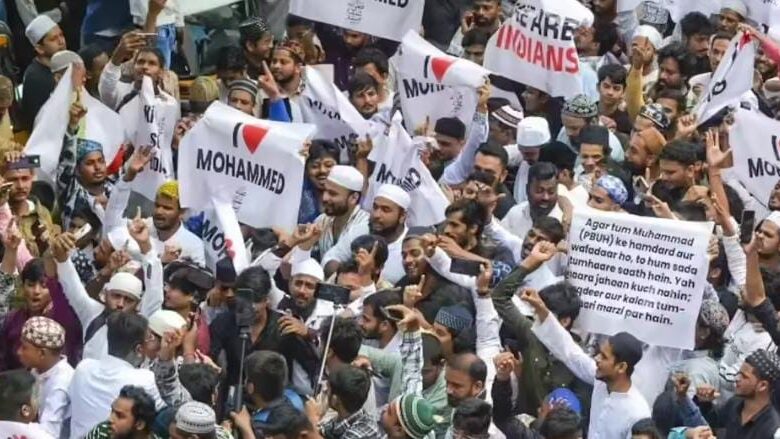
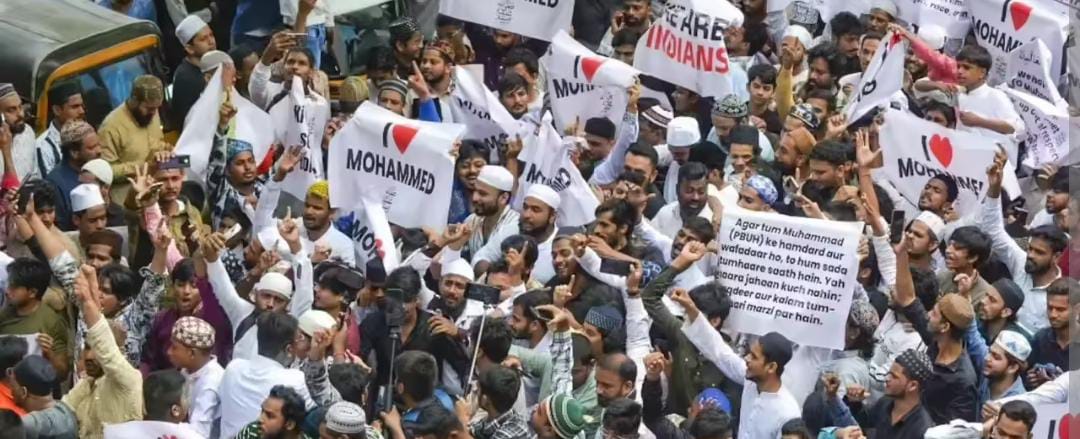
The recent surge in the “I Love Muhammad” campaign across India, sparked by offensive social media posts, has placed the Muslim community at a critical crossroads. The instinct to defend the honor of the Prophet Muhammad is a powerful and deeply rooted sentiment for every believer. To love the Prophet is a fundamental tenet of faith. Yet, in this charged atmosphere, we must pause and ask a profound question: what does that love truly demand of us? Does it call for street protests that can be hijacked by chaos, or does it demand a response that embodies the very essence of the man we seek to honour?
The immediate, raw reaction to insults is understandable. However, a response driven by anger alone risks betraying the very teachings we aim to protect. The life of the Prophet Muhammad is the ultimate guide for Muslims, not just in times of peace, but precisely in times of persecution and provocation. To defend his name in a manner that contradicts his example is a tragic irony. History provides a clear blueprint. For thirteen years in Mecca, the Prophet and his small band of followers endured relentless persecution, boycotts, and verbal and physical abuse that far exceeds the digital provocations of today. They were pelted with stones, called sorcerers and madmen, and had entrails thrown upon them while in prayer. What was the Prophetic response? It was not mob violence or destructive protests. It was patience (sabr), unwavering faith, and a commitment to dignified, principled preaching. The people of Ta’if, a town he visited seeking support, set their children and slaves upon him, stoning him until his shoes were clogged with blood. In this moment of utter despair and physical agony, the angel of the mountains came to him and offered to crush the city between two mountains. What did the Messenger of God say? His reply is a timeless lesson for humanity: “No. For I hope that from their progeny will come those who worship Allah alone, without associating any partners with Him.”
This is the magnanimity we are called to emulate. His concern was not for vengeance, but for the future guidance of the very people who harmed him. He transformed his personal pain into a prayer for their salvation. Can we claim to love him if we ignore this foundational lesson? Our protests, when they turn violent or disruptive, do not defend his honour, they obscure it. They allow the narrative to shift from the offence of a few to the reaction of the many, playing directly into the hands of those who seek to portray the community in a negative light. The most powerful rebuttal to misrepresentation is not a shouted slogan, but a lived example. The Qur’an describes the Prophet as “a mercy to the worlds” (21:107). His character (khuluq) was the Qur’an itself-embodying truth,
compassion, justice, and forgiveness. Our primary duty, therefore, is not merely to declare our love verbally, but to manifest it through our conduct.
When we respond to hatred with patience, to ignorance with knowledge, and to provocation with peaceful dignity, we become living testimonies to his teachings. This is the most effective form of dawah (invitation to Islam). It forces observers to question the caricature being presented. They see a community grounded in faith, not easily shaken by the vitriol of fringe elements. This quiet strength is far more disarming and compelling than any angry demonstration. Engaging in street protests, especially in the current volatile climate, carries significant risks. It exposes our youth to potential harm and legal repercussions. More dangerously, it allows agent provocateurs to infiltrate peaceful gatherings and instigate violence, tarnishing the entire community’s image and justifying further crackdowns. The goal of the trolls is to provoke a reaction to make us appear irrational and dangerous. By refusing to play this game, we rob them of their power.
This is not a call for silence or passivity. It is a call for a more intelligent, strategic, and faith-consistent response. Our energy must be redirected from the streets to more constructive avenues. Let us flood the internet and our communities with the true story of the Prophet Muhammad. Share his teachings on women’s rights, compassion for animals, respect for covenants, and justice for all. Let his life be the answer to the slander. Strengthen bonds within the community. Use mosques and community centers as hubs for spiritual grounding, teaching the Seerah (Prophet’s biography) in depth, so every Muslim, young and old, is rooted in the Prophetic example of patience and wisdom. Build bridges with sensible voices from other communities. Engage in dialogue, participate in interfaith initiatives, and work collaboratively on issues of common concern. This builds social capital and isolates the hatemongers. Pursue peaceful and legal means to address genuine incitement to violence. Channel efforts through lawful advocacy and legal complaint, mechanisms where they exist.
To my beloved community, the choice is ours. We can be reactive, allowing our emotions to be manipulated, or we can be proactive, defining the narrative through our wisdom and restraint. The greatest honour we can bestow upon the Prophet is to strive to be like him. Let our response to this controversy be one that, if he were amongst us, would make him proud. Let our lives, not our protests, be the ultimate declaration: “I Love Muhammad.’