


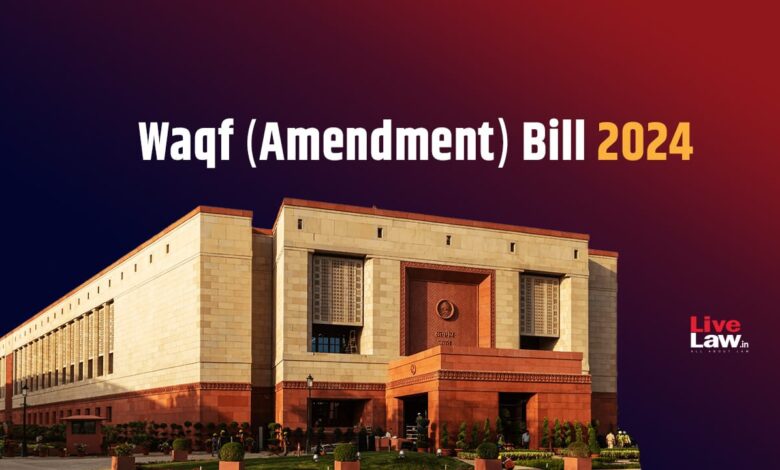

Waqf is an Islamic endowment in which a person donates movable or immovable property for religious, charitable, or social welfare purposes. In India, Waqf has played a significant role in preserving religious heritage and providing welfare services. As witnessed in the past, Waqf system has been extensively used to sustain mosques, madrasas, and charities. However, after British colonial rule disrupted the traditional governance of Waqf properties, cases of mismanagement, corruption, and illegal encroachments became prevalent. The legal framework for waqf properties in India has undergone multiple amendments to improve transparency and accountability. The major legislations include Waqf Act of 1954, Waqf Act of 1995- replaced the 1954 Act and introduced stricter regulations, Amendments in 2013- to make Waqf governance more transparent by introducing provisions like mandatory surveys of waqf properties, enhanced powers for waqf boards, and stricter penalties for mismanagement. The present debate is revolving around proposed Amendments in 2025 including Waqf claims to be backed by property deeds, increasing oversight by district magistrates, and mandating online declarations of Waqf assets etc.
The fundamental objective of waqf is to serve the public good. Historically, waqf institutions have played a vital role in social welfare, particularly in education, healthcare, and poverty alleviation. The purpose of waqf can be classified into three main categories: Religious Waqf. Charitable Waqf and Family Waqf (Waqf al-Aulad). While the essence of waqf is deeply rooted in public welfare, the reality in India has often been different. Due to poor governance, legal loopholes and corruption, many Waqf properties have been mismanaged, illegally encroached upon, or sold for private gains. The latest amendments proposed by the Joint Parliamentary Committee (JPC) are a direct response to the rampant corruption and mismanagement of waqf properties in India. Over the years, numerous cases have emerged where waqf assets were fraudulently transferred, sold, or misused. Under these circumstances, the amendments aim to Increase Government Oversight by allowing District magistrates and higher rank officers (amendment proposed) will now have the authority to investigate claims related to waqf properties, ensuring that public assets are not wrongly classified. This is crucial, as past cases have shown how government land was often misclassified as waqf property due to fraudulent claims. The amendments also aim to ensure Transparency Through Digital Records by listing Waqf properties online within six months thereby making it easier for authorities and the public to track ownership and prevent unauthorized transactions. This digital intervention is essential to curb corruption. The amendments further aim to Protect the Integrity of Waqf Donations by ensuring that those donating land to Waqf must now demonstrate that they have been practicing Islam for at least five years and affirm that their donation is voluntary. This will prevent coercion or fraudulent endowments. While these amendments address critical governance issues, the success of waqf reforms will depend on their effective implementation. Some of the persistent challenges include encroachments and illegal sales as despite legal protections, thousands of waqf properties have been illegally occupied or sold. The new amendments must be enforced strictly to recover such properties. Many Waqf boards are influenced by political interests, leading to biased decision-making and corruption. A more independent and transparent regulatory framework is needed. In addition, many intended beneficiaries of Waqf. including poor Muslims, are unaware of their rights. Awareness campaigns and lega laid programs should be introduced to help them claim benefits.
One of the proposed amendments seeks to modify the Wagf by User provision, which has historically allowed properties used for religious purposes to be recognized as Waqf, even in the absence of formal documentation. While concerns over fraudulent claims exist, it is equally important to recognize that many Waqf properties- particularly mosques, graveyards, and shrines- have existed for centuries without official documentation due to historical reasons. Many of these properties were donated through verbal declarations or community usage, and requiring property deeds for all cases might strip religious institutions of their Waqf status. A more balanced approach would be to introduce a verification mechanism that does not outright dismiss Waqf by the user but instead ensures that genuine waqf properties are protected while preventing fraudulent claims. This could involve a differentiating between historical and new Waqf claims- the law could apply stricter documentation requirements to new Waqf declarations while allowing historically established properties to be reviewed through a special tribunal rather than being dismissed outright. The amendment should include a provision ensuring that genuine waqf properties are not stripped of their status merely due to lack of documentation, particularly when strong historical and community evidence supports their legitimacy. By refining this provision, the amendment can strike a balance between preventing misuse and ensuring that historically significant waqf properties remain protected under Islamic law.
For centuries, Waqf institutions have played a crucial role in social and religious life, providing essential services to the community. However, the mismanagement of Waqf properties in India has eroded public trust and led to significant financial losses. The proposed amendments are a much-needed step toward restoring transparency and ensuring that Waqf assets serve their intended purpose. By introducing stricter legal safeguards, external oversight, and digital transparency, these reforms have the potential to curb malpractices and bring about a new era of responsible waqf governance. Ultimately, while these reforms represent a significant step toward greater transparency and accountability, careful attention must be given to preserving the religious and legal sanctity of waqf institutions. A well-regulated Waqf system can be a powerful tool for social development, benefiting millions in need while safeguarding the rich heritage of Islamic philanthropy in India.